
The whole Beginner level is free. Intermediate and Professional unlock for a one-time $29 each.
Sign up freeWhat Makes Soft-Serve Different
⏱ About 2 min read
⚡ In 30 seconds
- Served at −6 to −4 °C, warmer than scoop ice cream
- Lower fat (3–10%) and moderate overrun (30–60%)
- Freeze + scrape + air = texture
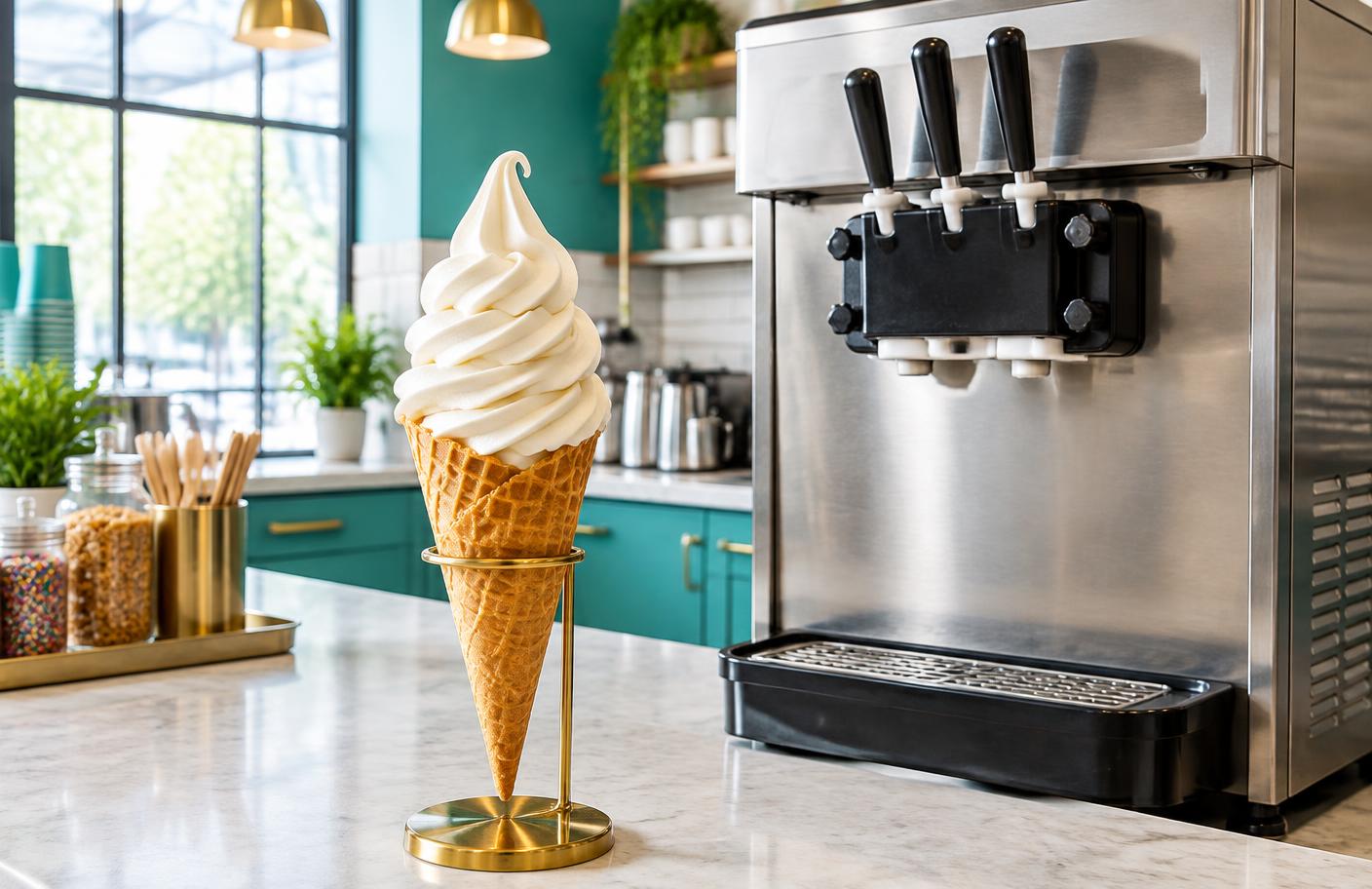
- A good swirl is glossy, dry and holds its shape
Soft-serve is ice cream served straight from the freezing cylinder at about −6 to −4 °C, warmer than hard-scoop ice cream (around −14 to −12 °C in the dipping cabinet). That warmer temperature is why it feels smooth and silky and why it melts faster.
It is also lower in fat — usually 3–10% compared with 10–16% for premium hard ice cream — and has less air whipped in. That air is called overrun: soft-serve normally runs 30–60%, premium scoop ice cream can be 20–50%, and cheap tub ice cream can reach 100%.
The machine does three jobs at once: it freezes the mix against a cold cylinder wall, a beater (dasher) scrapes and whips it, and air is drawn in to give volume. Get those three in balance and you get a glossy, dry, stand-up swirl.
Watch Real Barista Demonstration
🏪 Real Café Scenario
A guest says your soft-serve tastes 'icy'. That usually means the mix sat too long in the cylinder or the machine is not keeping up — not a bad recipe.
Try this today
Pull a test cone before every shift. If it slumps or weeps, fix the machine before the first customer arrives.